Tag: Bespoke Suits

  • Beyond Navy: 5 Autumn Tailoring Ideas You Might Not Have Considered

    There is something about autumn that makes getting dressed more interesting.

    The lighter fabrics of summer disappear, layers return, and suddenly there is much more to work with — richer colours, heavier textures and, particularly in Scotland, a very good reason to own a proper coat.

    But autumn tailoring doesn’t have to mean simply reaching for another navy or charcoal suit.

    Here are five combinations worth considering this season.

    1. Brown + Grey
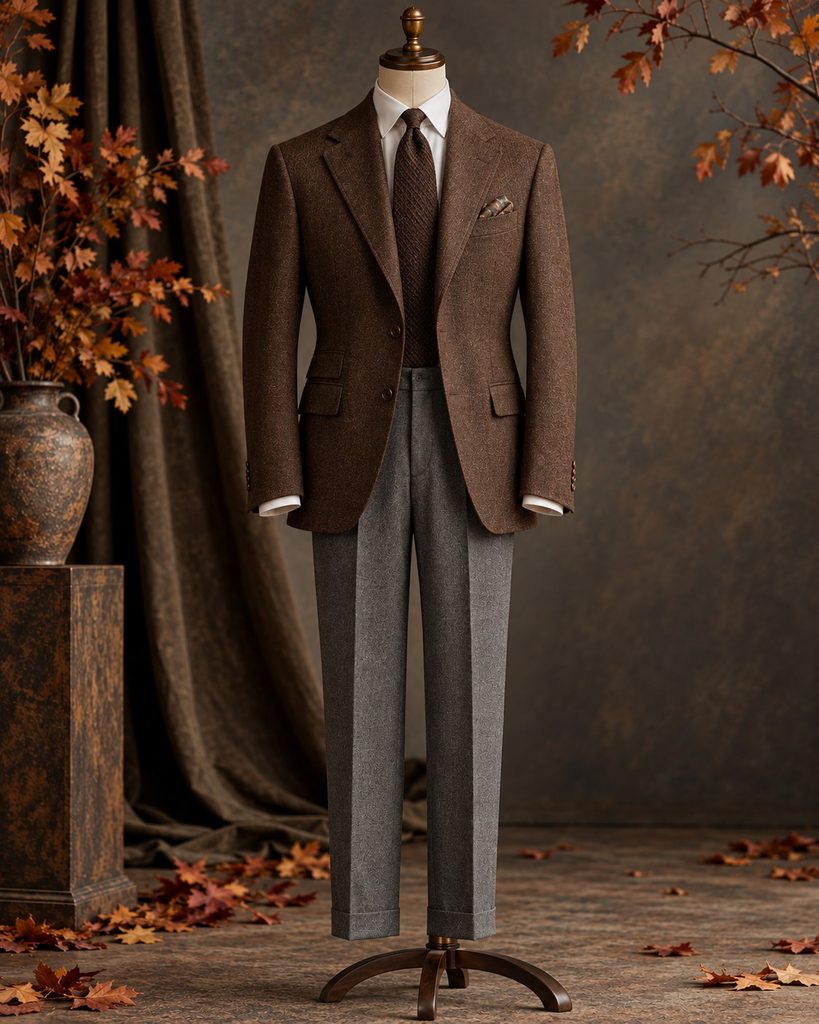
    Brown tailoring can sometimes feel like a bigger step than navy or grey. It doesn’t need to.

    Pairing a brown jacket with grey trousers keeps the outfit understated while introducing warmth and interest.

    For autumn, look towards richer tobacco, chocolate and earthy brown tones. They work particularly well with grey flannel trousers, a pale blue or white shirt and dark brown shoes.

    It’s different without trying particularly hard to look different.

    2. Olive + Navy
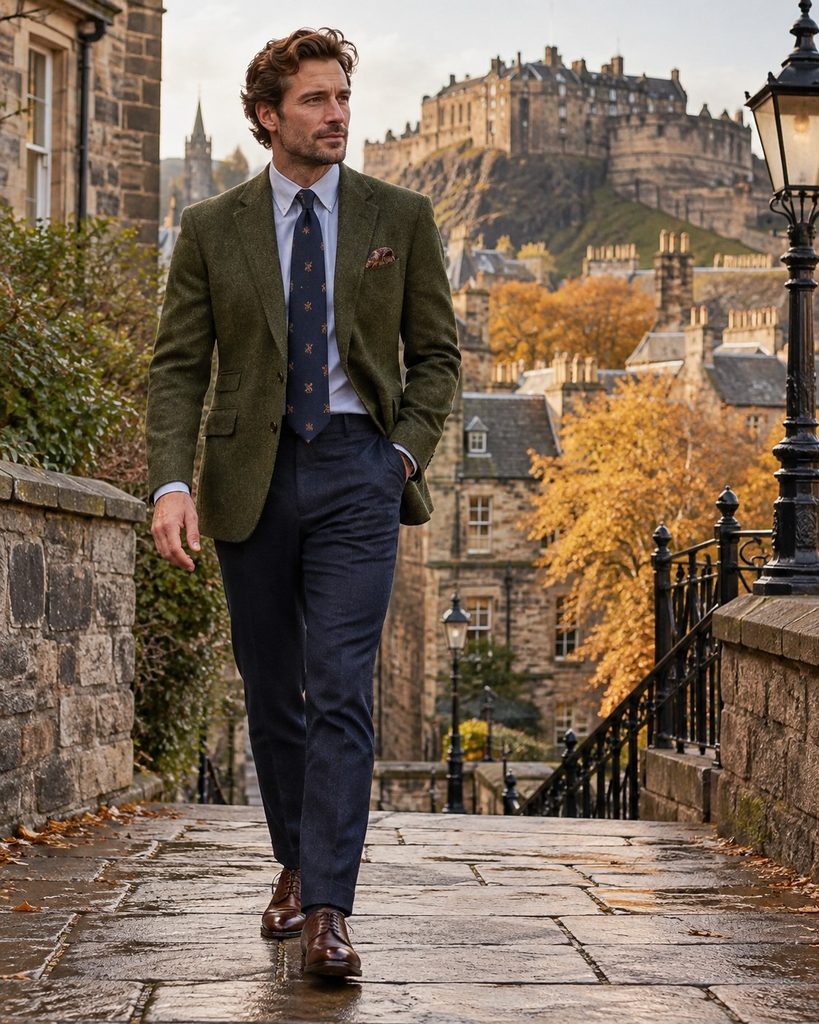
    Green is surprisingly easy to wear.

    Deeper shades such as olive and forest green work particularly well alongside navy, brown and grey — which means they can slot into an existing wardrobe without requiring everything else to change.

    An olive jacket with navy trousers is a simple place to start.

    For something more subtle, reverse it: navy tailoring underneath an olive overcoat.

    3. Swap the Shirt for Knitwear
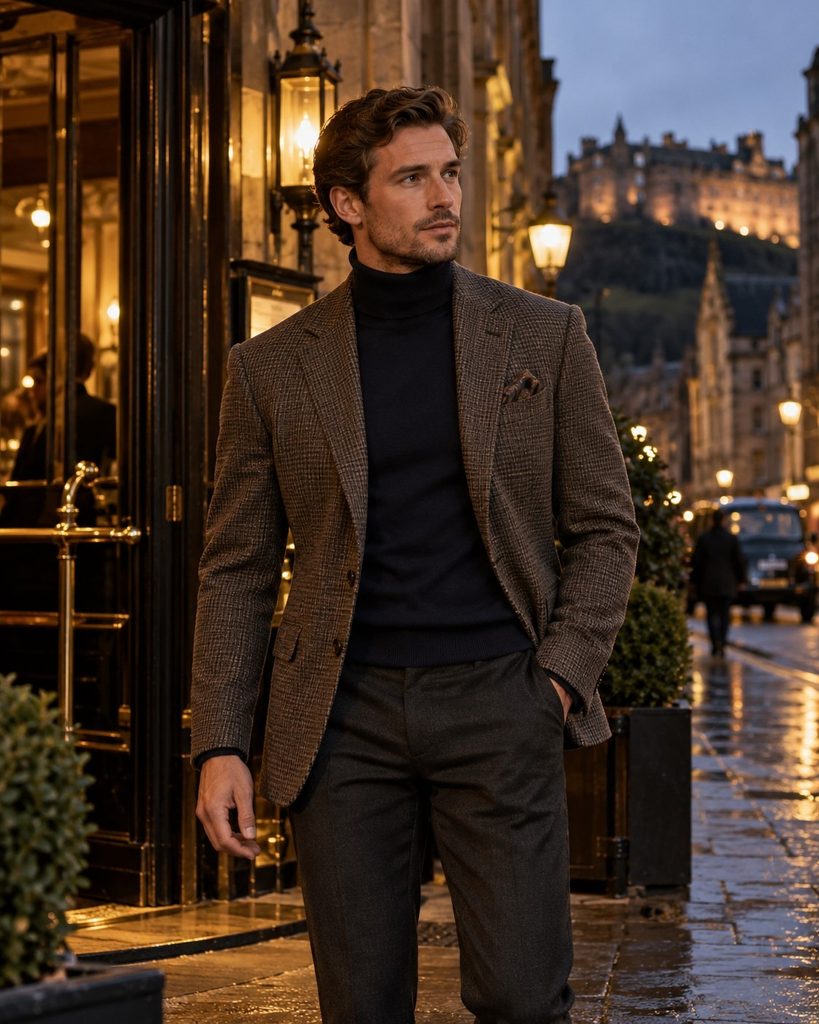
    Tailoring doesn’t always need a shirt and tie.

    As temperatures fall, fine knitwear underneath a tailored jacket creates a softer, more relaxed look while still feeling considered.

    A fine-gauge crew neck can work beautifully beneath a jacket. A knitted polo creates something slightly smarter. And a roll neck can completely change the character of an otherwise traditional piece of tailoring.

    It’s particularly useful for dinners, drinks and occasions where a suit might feel too formal but you still want to look properly dressed.

    4. Make the Overcoat Part of the Outfit
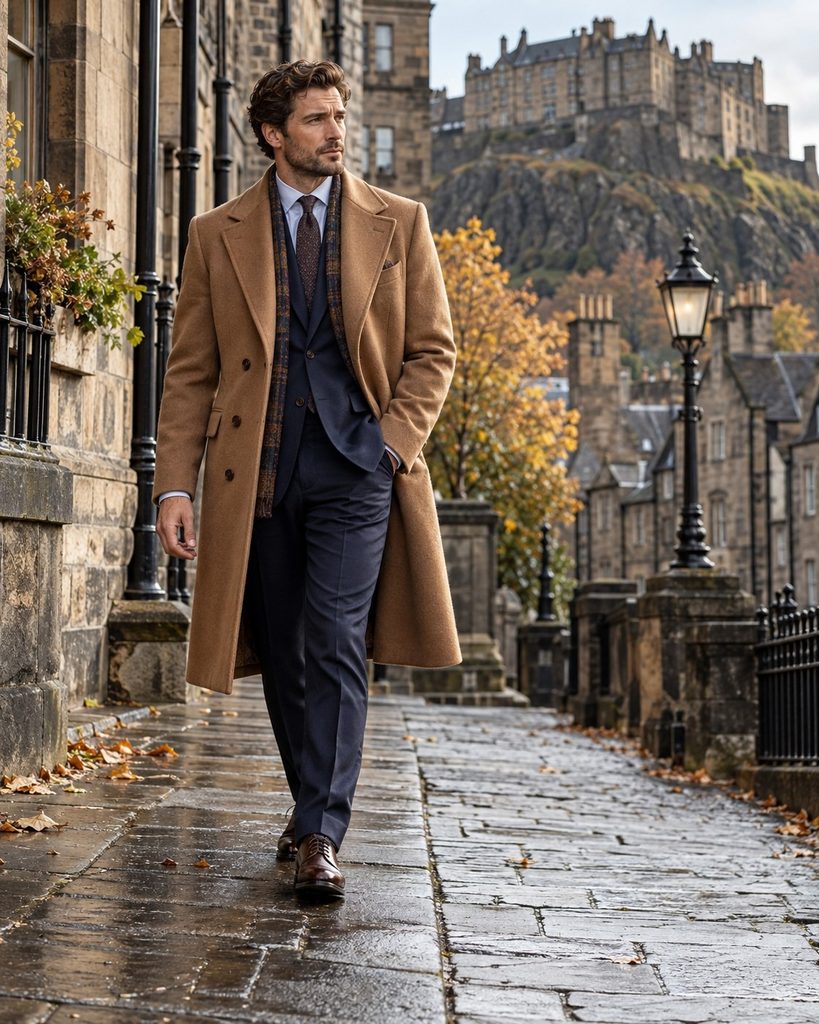
    An overcoat is often treated as the practical part of an outfit.

    In reality, throughout autumn and winter it’s frequently the first thing anyone sees.

    So rather than simply throwing a coat over an otherwise considered outfit, make it part of it.

    Camel over navy. Deep olive over grey. Chocolate brown over softer neutral tones.

    A good overcoat should work just as comfortably over tailoring as it does with knitwear and more relaxed clothing.

    And in Scotland, chances are it’ll get considerably more wear than something reserved exclusively for special occasions.

    5. Stop Thinking in Suits
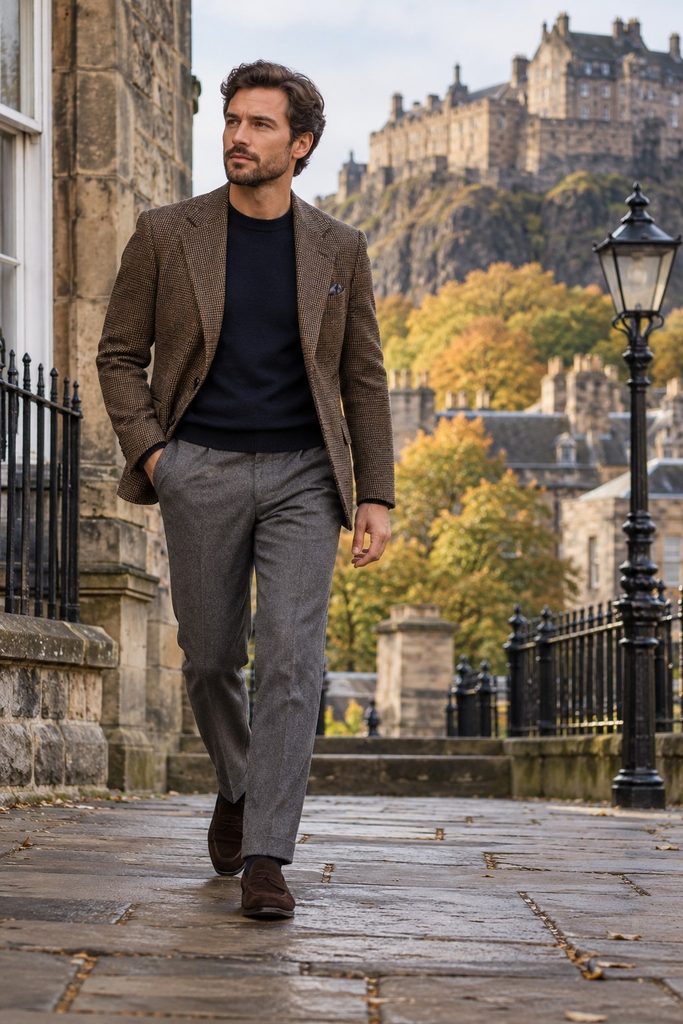
    One of the easiest ways to get more from tailored clothing is to stop thinking of every jacket and trouser as belonging to one particular outfit.

    A textured jacket with flannel trousers.

    A navy jacket with grey trousers.

    A brown jacket with denim or chinos.

    Add knitwear, change the shoes or introduce an overcoat and the same pieces can feel completely different.

    This is where a well-considered wardrobe becomes far more useful than simply owning more clothes.

    Autumn Tailoring: Think Wardrobe, Not Garment

    At Edinburgh Tailoring Company, choosing a cloth is only one part of the conversation.

    We also consider where you’ll wear something, what you already own and how a new garment can work alongside the rest of your wardrobe.

    Because the best wardrobe isn’t necessarily the biggest.

    Sometimes it’s one where a single new piece gives you three, four or five new ways of wearing things you already own.

    And occasionally the best place to start is simply:

    “I hadn’t considered that.”
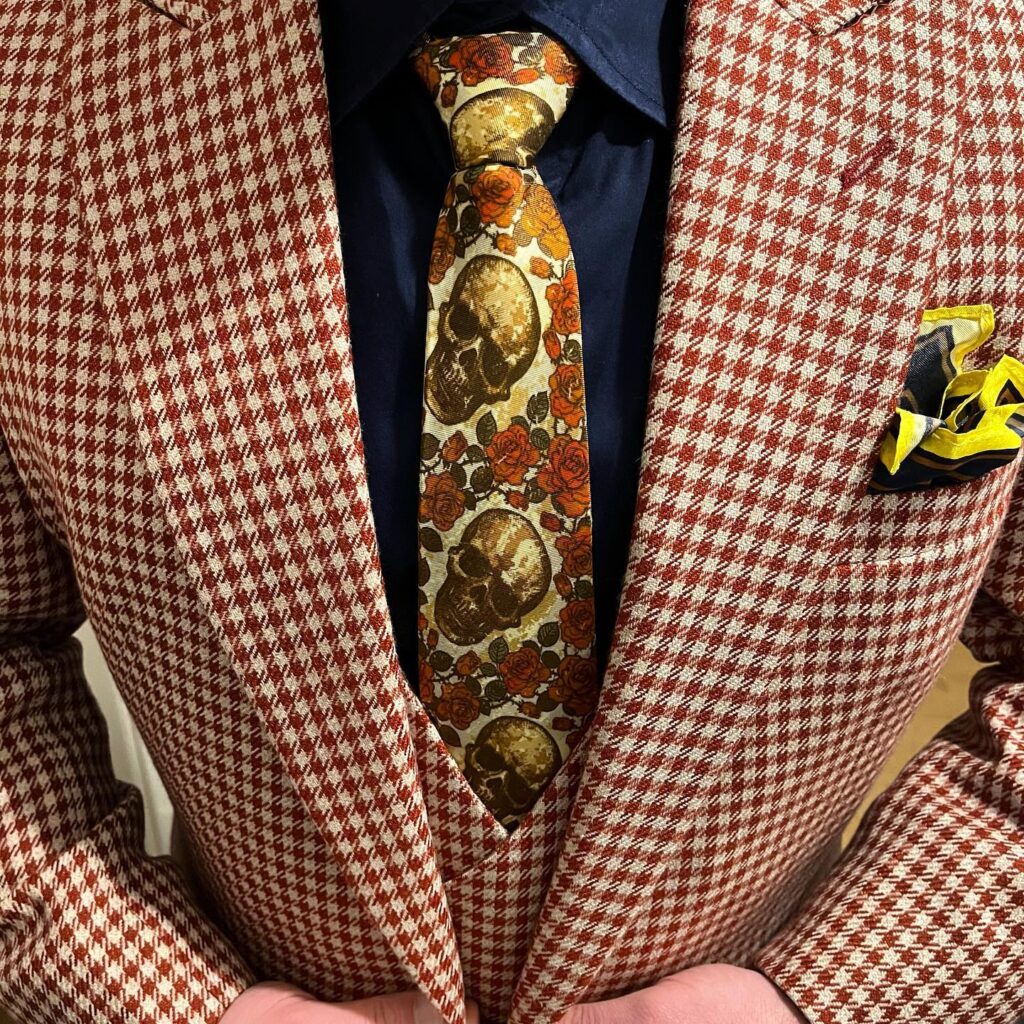
  • What Are Your Options When Choosing a Bespoke Suit?

    If you’ve ever looked into ordering a bespoke suit and thought, I’ve no idea where to even begin, you’re in very good company. Most people don’t.

    But that’s the whole point of visiting a tailor. It’s not about knowing everything before you walk in the door, it’s about discovering it together.

    The process is meant to be enjoyable. Choosing a bespoke suit should feel less like ticking boxes and more like shaping a story. One that happens to fit you perfectly.

    After almost twenty years in tailoring, I can tell you this much: people often come to me thinking they need guidance on what’s correct, but what they really need is help finding what feels right for them.

    So let’s talk through the main choices that define a bespoke, handmade suit.


    1. The Style: Structure and Character

    This is where everything starts. The style of your suit determines the shape, the feel, and ultimately the message it sends when you wear it.

    Single or double-breasted. Peak or notch lapel. Two-piece or three. Side vents, centre vent, or none at all. Soft shoulder or roped. Modern slim or timeless British drape.

    It’s not just about fashion, it’s about proportion and personality.

    Some clients bring in photos. Others just point at the Sean Connery picture on the studio wall and say, “That one.” Either way, your tailor should interpret what you’re drawn to, explain the reasoning behind each detail, and build something that complements you, not just your frame.


    2. The Cloth: The Heart of the Suit

    If style is the structure, the cloth is the lifeblood running through it.

    The cloth determines how the suit drapes, breathes, and behaves. How it looks under light, how it feels after a long day, and how it lasts over time.

    At Edinburgh Tailoring Company, we have access to thousands of options: fine worsteds, tweeds, mohair blends, wool and silk, even pure cashmere. Each one brings a different energy.

    A daily office suit might call for something durable and practical. A wedding suit allows you to explore texture, weight, and luxury.

    One of the first questions any good tailor will ask is, how often will you wear it? That single answer shapes almost every decision that follows.


    3. The Lining: Your Personal Signature

    This is where the fun begins.

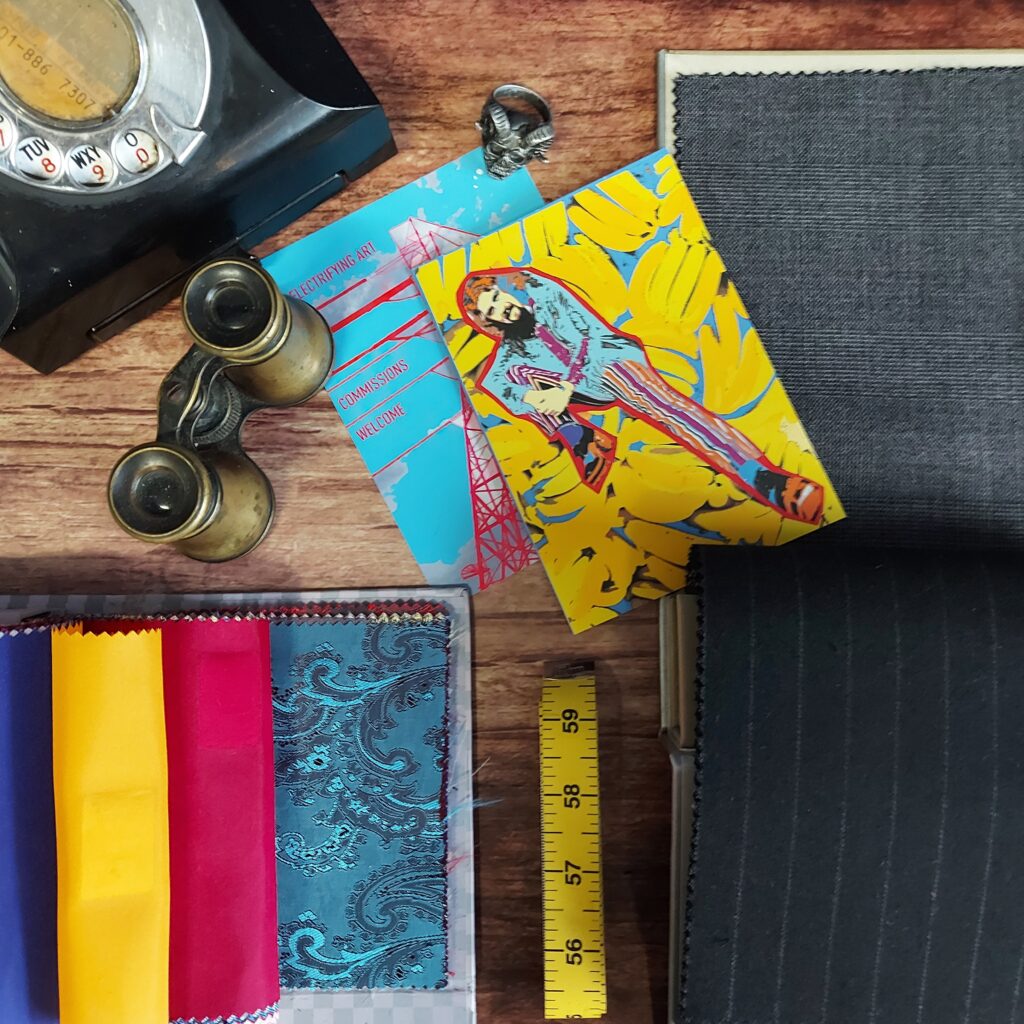
    Lining choice is the hidden expression of personality inside every bespoke garment. For some, it’s bold, such as a deep red paisley, a flash of cobalt satin, or a full printed scene that no one else will ever have. For others, it’s understated. Something clean, tonal, and quietly refined.

    We hold over 1200 lining choices, and if none of them feel right, we’ll help you source something that does.

    Think of it as the inside joke between you and your suit.


    4. The Experience: Guided, Not Overwhelming

    If all of this sounds like a lot, don’t worry. That’s what the process is for.

    Your tailor’s role is to listen, ask the right questions, and narrow down your options until the choices feel effortless. By the end of a consultation, we’ll usually have distilled everything into three or four strong combinations. This is the moment where you start to see your suit coming together.

    And that’s when it gets exciting.


    5. The Point of It All

    A bespoke suit isn’t about chasing trends or copying someone else’s idea of style. It’s about crafting something that could only belong to you.

    That’s what makes tailoring so powerful. It’s design with purpose. It’s confidence made visible.

    And yes, it’s also a bit addictive. Once you’ve had something made properly, it’s very hard to go back.


    If you’re thinking about commissioning a bespoke suit, come and have a chat. No sales pitch, no pressure at all. Just a conversation about what’s possible when you start from scratch.

    Book a consultation to visit us in Edinburgh or our Glasgow visit (each Tuesday). Let’s talk style, cloth, and everything in between.

  • How Much Should a Bespoke, Handmade Suit Cost from a Tailor?

    It’s a question people ask us all the time.

    Usually they all or email and ask, “Chris, how much should a bespoke, handmade suit cost?”

    My honest reply: “Well, that really depends on what you need, how often you’ll wear it and whether it’s for a special occasion. How long is a piece of string?”

    It’s not the answer anyone wants to hear, but I do tend to win them back when I say our bespoke suits start at £749.

    “£749? How is that even possible?”

    Let’s break it down.


    Understanding what goes into the price

    As a professional tailor with nearly 20 years’ experience, I can tell you that pricing something as unique as a bespoke, handmade suit isn’t straightforward. There are a lot of moving parts. Materials, labour, design work, fittings, potential shipping and finishing. But let’s look at the key factors and what you actually get for your money.

    Our two-piece bespoke suits start at £749, and a three-piece suit starts at £999. On average, clients spend around £1,249 for a two-piece and £1,599 for a three-piece, depending on their chosen cloth and details. At the very top end, a fully bespoke two-piece can reach £10,995, or £14,999 for a three-piece, when we’re working with the rarest and finest fabrics in the range.

    So yes, there’s quite a range. And there’s good reason for it.


    What you get at the starting point

    For £749, you’ll receive a fully bespoke, handmade two-piece suit, crafted to your measurements using one of around 40 cloth options. All 100% four-seasons wool, in a variety of colours, patterns and textures.

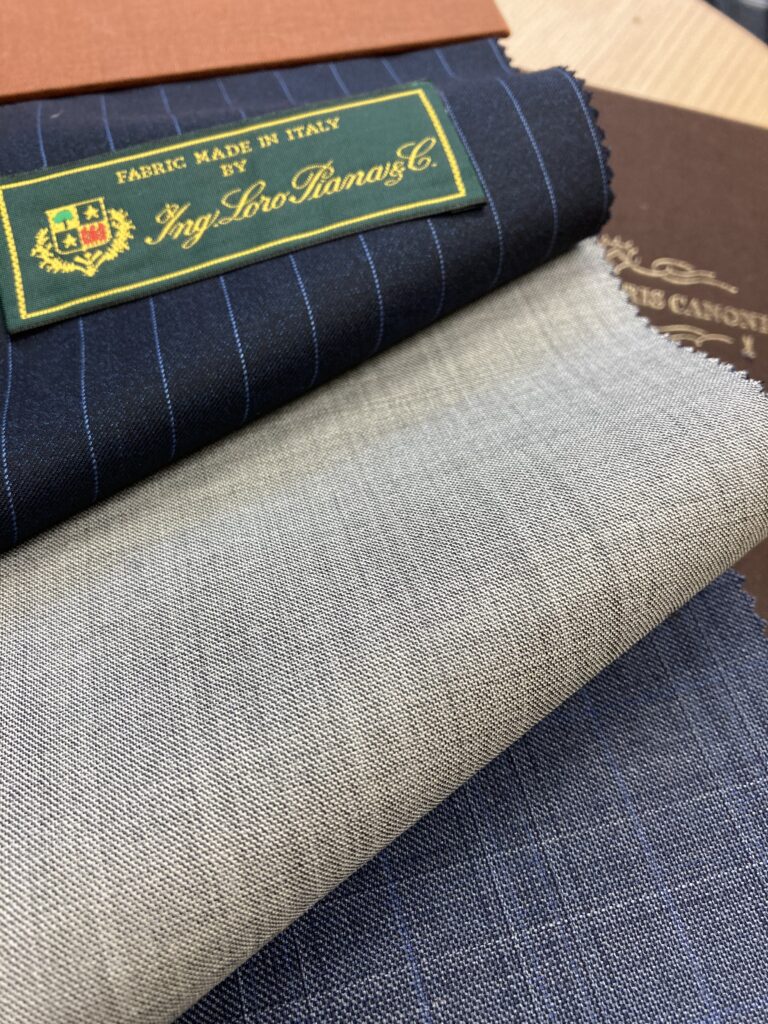
    This starting collection does sell quickly, and while we do our best to restock, from time to time a particular fabric may be unavailable. Beyond that, we also work with some of the most respected mills and merchants in the world, including Abraham Moon, Holland & Sherry, Huddersfield Fine Worsteds, Dugdale Brothers, Loro Piana, and Scabal, to name a few.

    If you fall in love with a fabric we don’t currently hold, we can usually source it. Most reputable tailors can, even if they don’t advertise it.


    How we’re able to offer bespoke suits from £749

    People often assume that a starting price like ours means cutting corners. It doesn’t.

    Our process is as traditional as any bespoke tailor’s, but we’ve built efficiencies into how we work. The key is ownership, proximity, and process:

    • We own our house-cloth stock, which means we don’t pay standard industry mark-ups on ‘cut length’ cloth.
    • We keep all our house-cloth ‘in-house‘, so there are no extra shipping or handling costs between supplier and workshop.
    • We run a very precise production system, ensuring every hour of labour and every stage of craftsmanship is accounted for, and nothing is wasted.

    We also accept that we make less as a business on your first order. That’s because it involves the additional work of creating your personal pattern and any adjustments or remakes needed to make it perfect. Once that’s done, the pattern is yours, and future orders become simpler, faster, and even more precise.

    In short, the price of each suit reflects two things:

    1. The cost of the cloth and lining you choose.
    2. The amount of skilled work required to make your garments.

    Bespoke vs Made-to-Measure. Know the difference

    This is where a lot of confusion (and frustration) comes in.

    Made-to-measure garments start from an existing pattern (known as a block) which is adjusted to fit your measurements. The result can be very good, but it’s still based on a pre-existing shape.

    Bespoke, on the other hand, starts with a blank canvas. Every aspect of the pattern is drawn from your measurements and body shape. The chest, back, shoulders, and posture are all accounted for individually, so the fit is sharper and more personal.

    That’s why bespoke usually costs more. It’s more labour-intensive, requires more fittings, and takes longer to make.

    One client once came to me after ordering what he believed was a bespoke velvet jacket from a well-known Edinburgh company. He’d paid a bespoke price but received a made-to-measure garment that didn’t fit, even after nine fittings.

    I explained how we work, offered to make a mock-fitting jacket from calico so he could see the pattern before we cut the real cloth, and we completely restored his faith in the process. He’s now one of our most loyal clients.


    Advice from an experienced tailor

    If you’re shopping around for a bespoke suit, here’s what I’d recommend:

    • Arrange two or three consultations with different tailors. Get a sense of how they work and whether they take time to understand what you want.
    • Ask questions. Any reputable tailor should be happy to explain their process and pricing clearly.
    • Check whether they offer a measurement guarantee.
    • Ask where the suit is made. Be cautious of vague answers like “made by our UK tailoring partner.”
    • Clarify whether it’s truly bespoke or made-to-measure.

    And if you’re working to a budget, be upfront. A good tailor will help you find the best way to achieve what you want, or explain what might need to wait until next time.

    At Edinburgh Tailoring Company, our goal is to give you freedom of choice. With over 10,000 cloths and 1200 linings available, there are billions of possible combinations, and a price point for almost everyone.

    We can also quote cloths from UK and European mills upon request.


    In summary

    If you’ve read this far, thank you. You clearly care about what goes into a truly bespoke suit.

    The truth is, there isn’t one simple answer to how much a bespoke, handmade suit should cost. It depends on the materials, the craftsmanship, and the experience you want.

    At Edinburgh Tailoring Company, we simply believe a bespoke suit should cost no more than it truly needs to, and that you should enjoy every part of the process along the way.

    If you’d like to find out how much your own bespoke suit would cost, get in touch. We’re always happy to have a no-strings chat.